
Snacks, bakery products, frozen foods, spices and confectionery are often packed in flexible film. The production date, expiry date and batch code are printed onto that film, usually inside the packaging machine. Two technologies are most often considered for the job: thermal transfer overprinting (TTO) and thermal inkjet (TIJ).
How each technology prints on film
Thermal transfer overprinting (TTO)
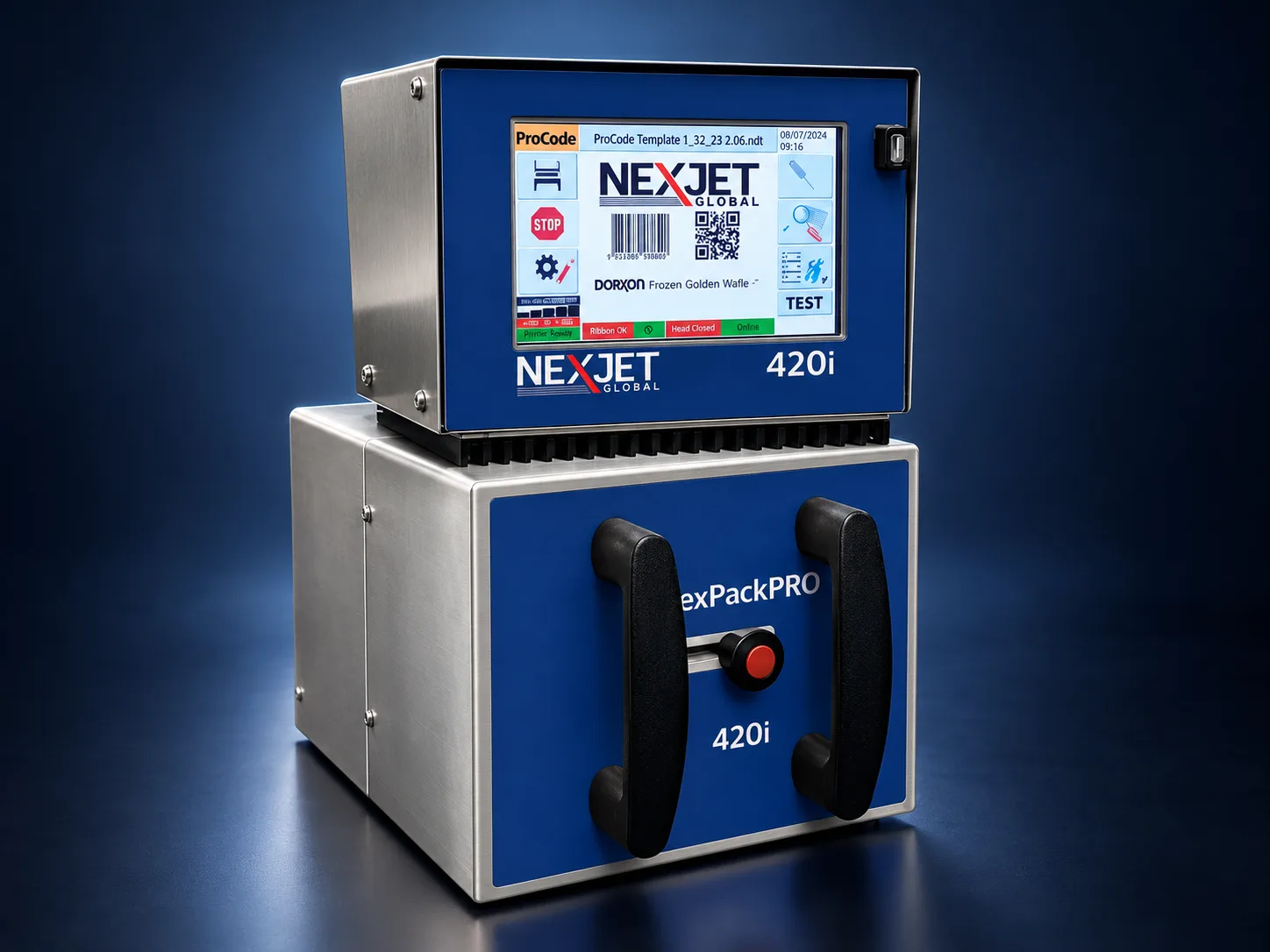
A TTO printer is mounted on the packaging machine. A printhead with a row of tiny heating elements presses a ribbon against the film and melts ink from the ribbon onto it. The result is a sharp, high-resolution print that is dry immediately. Our TTO guide covers the process in detail.
Thermal inkjet (TIJ)
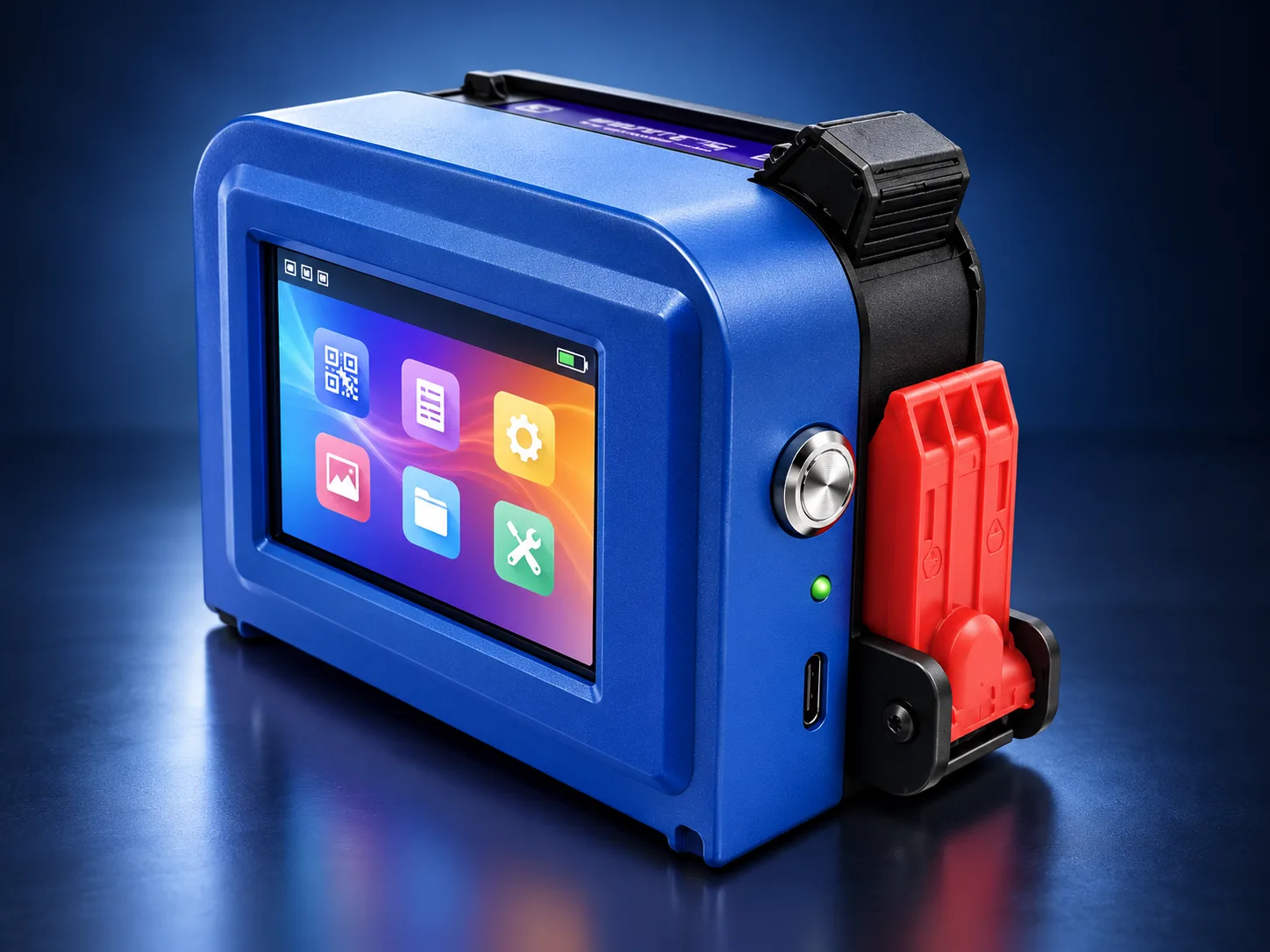
A TIJ printer fires tiny ink drops from a cartridge printhead onto the film as it passes. No ribbon or contact is needed. On film, TIJ usually needs a solvent-based ink that dries quickly and adheres to the plastic surface.
Side-by-side comparison
Print quality
Both technologies print sharp text, logos and barcodes. TTO is especially strong on smooth films and labels, producing very crisp barcodes and small text with high contrast. TIJ quality depends more on the ink and film combination, and drying time matters on non-porous film.
Films and surfaces
- TTO prints on most smooth flexible films and labels used in food packaging. The ribbon grade is matched to the film.
- TIJ prints well on paper, labels and porous materials, and on some films with suitable solvent ink. It is often preferred on paper-based or matte surfaces.
Packaging-machine integration
- TTO is designed for packaging machines: vertical and horizontal form-fill-seal, flow-wrap, thermoforming and labelling machines. It prints in intermittent mode on stationary film or continuous mode on moving film.
- TIJ can also be fitted to packaging machines, but it is more often used on conveyors coding cartons and labels after packing.
Print area
TTO can print large blocks of text, such as several lines of variable information or an ingredient panel, within its print width. TIJ print height per printhead is smaller, although several heads can be combined.
Consumables and waste
- TTO uses ribbon. Ribbon is consumed in proportion to the print area and some ribbon is used between prints, although modern printers minimise this gap.
- TIJ uses cartridges. There is little waste, but cartridges cost more per millilitre of ink and solvent cartridges need correct storage.
Maintenance
TTO maintenance includes ribbon changes and printhead cleaning; the printhead itself is a wear part. TIJ maintenance is mainly cartridge changes and wiping, with a new printhead in every cartridge.
When to choose TTO
- Pouches, sachets and flow-wrapped products coded inside the packaging machine.
- Smooth plastic films and labels.
- Larger print areas, multi-line text and barcodes.
- Codes that must be dry and smudge-free immediately.
See the TTO 420i thermal transfer overprinter.
When to choose TIJ
- Paper-based or matte packaging and labels.
- Cartons and shipper cases after the product is packed.
- Lines that prefer a cartridge-only process with no ribbon handling.
See the inline TIJ printer.
A practical approach
Many food factories use both: TTO on the packaging machines for primary packs, and TIJ on the end-of-line conveyor for cartons and outer cases. If your product is not packed in film, compare CIJ and TIJ in our CIJ vs TIJ comparison.
To choose for your film, send the film type, print area, packaging-machine make and model, packs per minute and code content. A sample print on your own film is the best test.
Frequently asked questions
Is TTO or TIJ better for pouches?
For pouches made on form-fill-seal machines, TTO is usually the first choice because it is built into the packaging machine and prints sharp, immediately dry codes on smooth film. TIJ is an option on some films and on paper-based pouches.
Does TTO need ink?
No liquid ink is used. TTO transfers ink from a ribbon, which is chosen to suit the film and how durable the code needs to be.
Can TIJ print on plastic film?
Yes, with a suitable solvent-based ink, but drying time and adhesion must be tested on your film.
Which is better for barcodes on flexible packaging?
Both can print scannable barcodes. TTO is especially reliable for high-contrast barcodes on smooth film and labels.
Can one factory use both TTO and TIJ?
Yes. A common setup is TTO on the packaging machines for film packs and TIJ on the conveyor for cartons and outer cases.
Editorial guidance informed by the NEXJET company catalogue. This is not a model-specific datasheet.