
Why start with the material?
Each technology only works well on certain surfaces. Ink has to adhere and dry, a ribbon needs a smooth backing, and a laser needs a material that reacts to its wavelength. Choosing the printer first and the material second is one of the most common reasons a coder underperforms.
Describe the material precisely: the base material (glass, PET, HDPE, coated carton, film, metal, cable compound), its coating or finish, colour and curvature, and whether the surface is wet, cold, oily or dusty when it reaches the printer.
Which technology suits which material?
Use this as a starting point, then confirm with samples:
- Cartons, cases and paper: thermal inkjet (TIJ) with water-based ink for sharp text and barcodes; CO2 laser on suitable coated or printed cartons; large-character inkjet for outer cases.
- Flexible film and pouches: thermal transfer overprinting (TTO) on the packaging machine; solvent-based TIJ for some films; laser only where the film has been tested.
- Glass and PET bottles: continuous inkjet (CIJ); CO2 laser on many glass and PET applications.
- Rigid plastics such as HDPE and PP: CIJ; UV laser where a high-contrast mark without ink is needed, after testing.
- Metal cans and metal parts: CIJ for date coding; fiber laser for permanent marks on metal.
- Cable, wire and pipe: CIJ, including pigmented inks on dark compounds; fiber, CO2 or UV laser depending on the compound.
- Sacks and building-material bags: wide-format or large-character inkjet.
What exactly do you need to print?
Define the code exactly, because the content decides the resolution and print height you need:
- Number of lines and character height
- Production, expiry or best-before dates, and whether Hijri dates are required
- Batch numbers, counters and times
- Barcodes or 2D codes such as GS1 DataMatrix or QR, and the scan grade they must achieve
- Logos and Arabic text
Simple dates and batch numbers can be printed by every technology. Dense 2D codes and small text need high resolution, where TIJ, TTO or laser usually fit better than CIJ.
How does the production line affect the choice?
The way the product moves decides how the printer is mounted and how fast it must work:
- Continuous or intermittent: a continuously moving conveyor suits CIJ, inline TIJ and flying laser; a packaging machine that stops the film each cycle suits intermittent TTO.
- Speed and pitch: products per minute and the gap between them, stated with units.
- Print position: top, side or underside, the distance from printhead to product, and how steady the product is as it passes.
- Integration: mounting space, guarding, signals from the PLC, and whether a vision system must check each code.
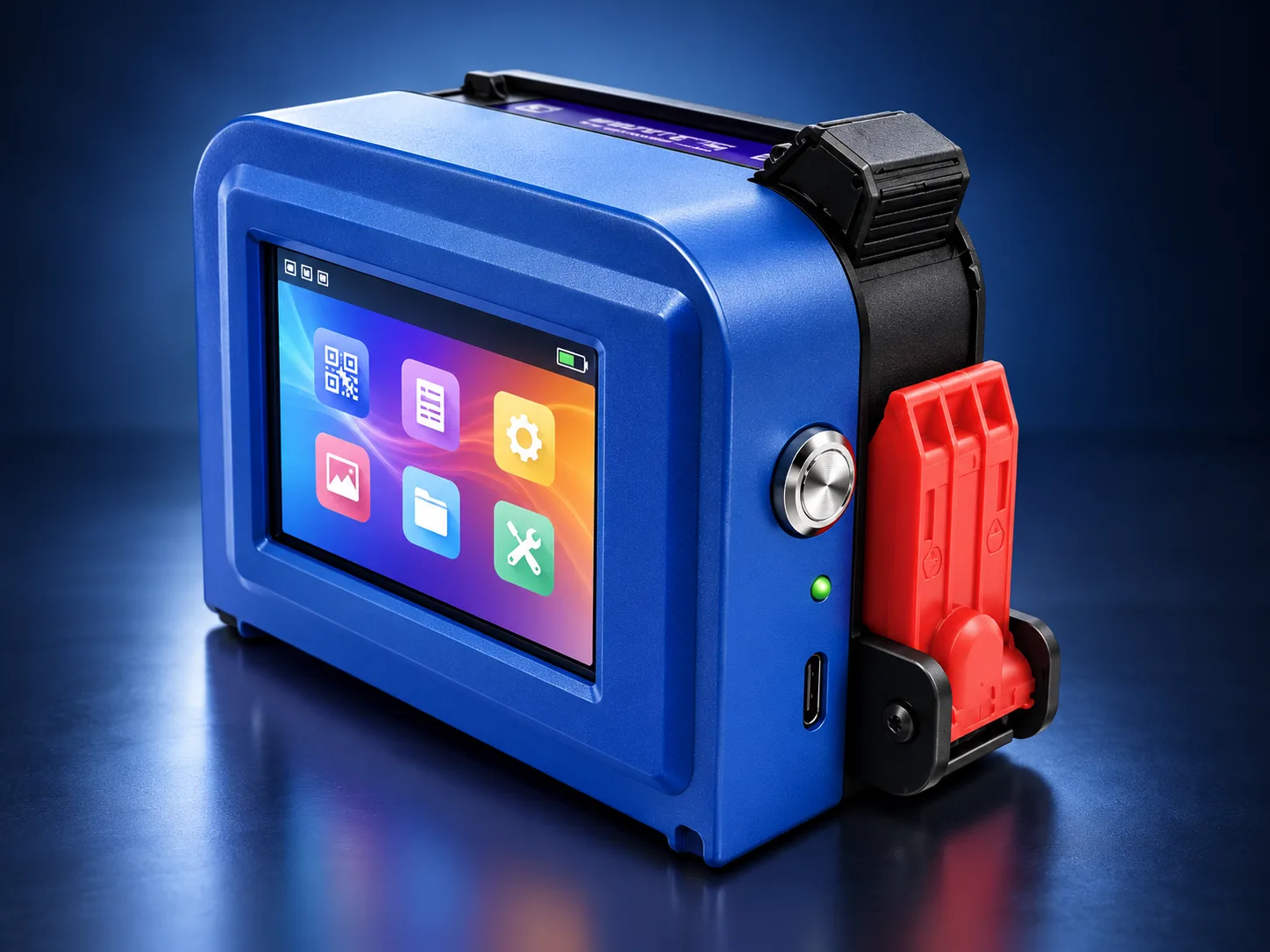
- Volume: occasional or batch coding may not need an inline printer at all. See handheld versus inline thermal inkjet.
What about the factory environment?
Heat, humidity and dust affect inks, solvents, electronics and lasers. In Saudi and GCC factories, check the verified operating temperature and humidity range of the specific model, its protection rating, and the conditions where consumables are stored. Laser systems may also need cooling and fume extraction.
How do running costs compare?
Each technology spends money in a different place:
- CIJ: ink, make-up fluid, filters and scheduled service.
- TIJ: cartridges, which also contain the printhead.
- TTO: ribbon, with the printhead as a wear part.
- Laser: no ink, but a higher purchase price, fume-extraction filters and, for some laser sources, a chiller.
Compare cost per 1,000 acceptable codes using your own code size and line utilisation, and treat purchase price, service and downtime as separate parts of the total cost of ownership.
Prove the choice with a sample test
A sample test is the only reliable proof. Send real packs, including the worst case: the darkest colour, the wettest surface, the most curved shape. Ask for the printed result, the settings used and the line speed it represents. Then check adhesion, contrast, scanner readability and whether the code survives handling, chilling or sterilisation.
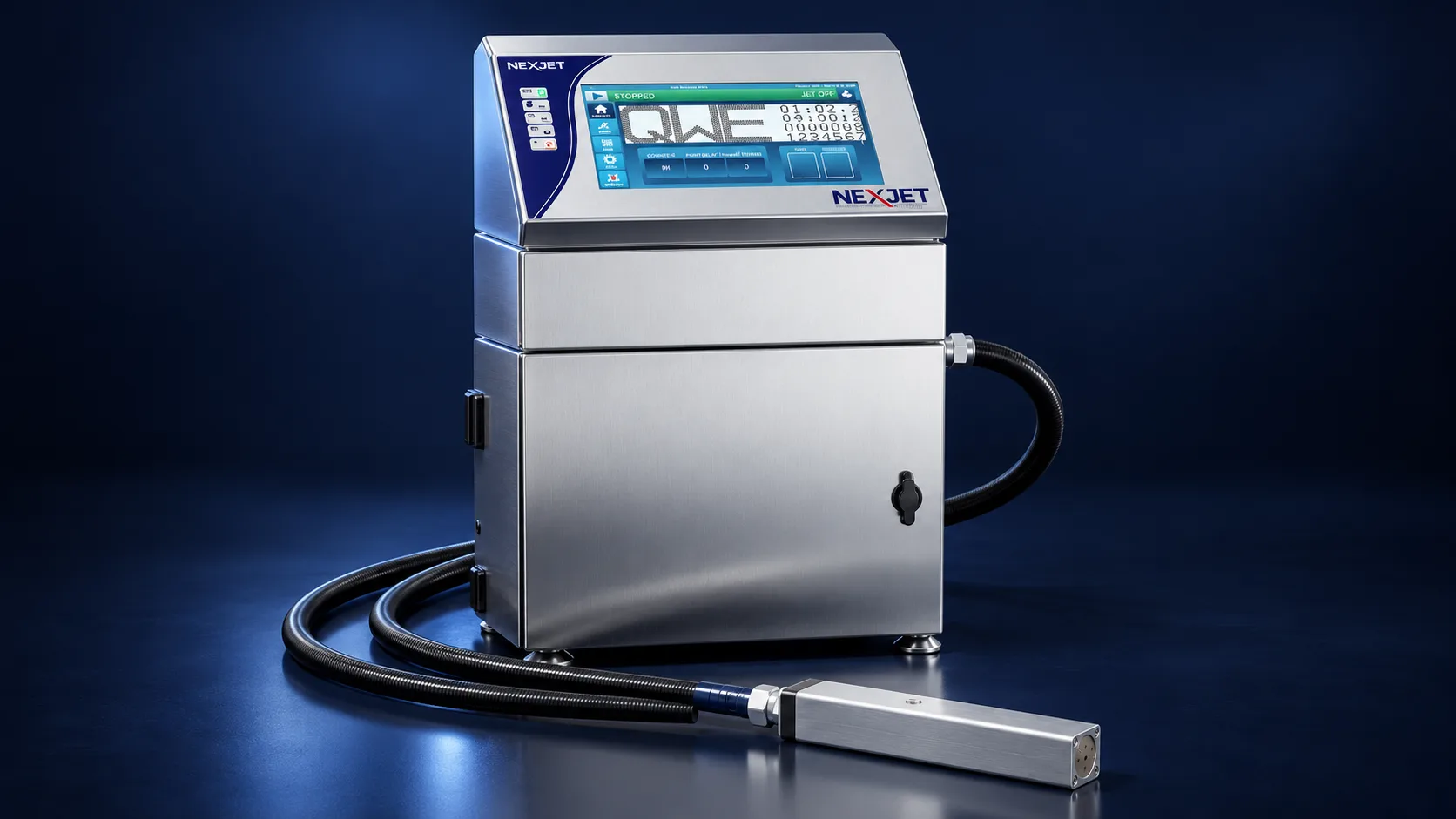
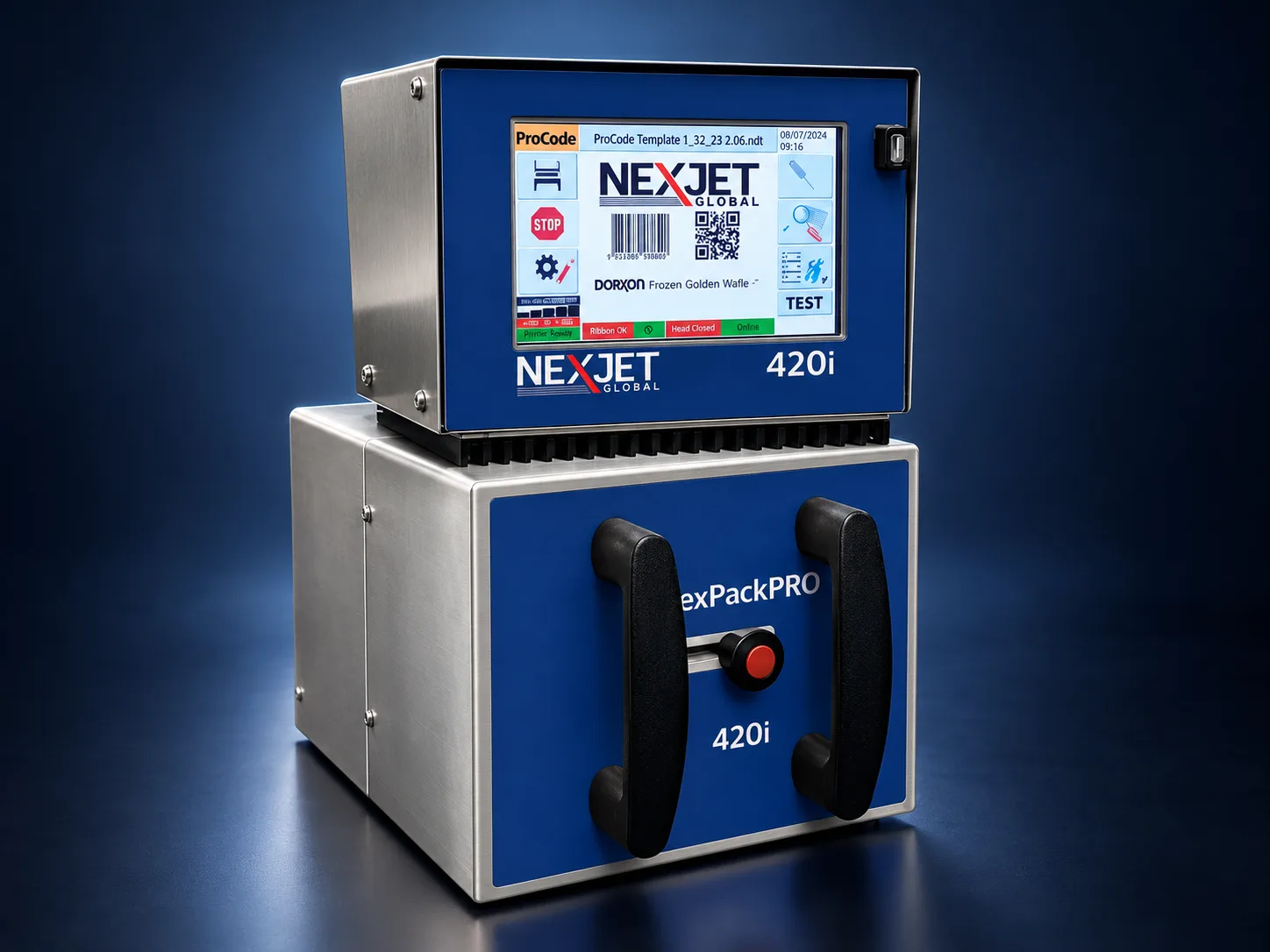
To compare equipment, see the CIJ coding inkjet printer, the inline thermal inkjet printer and the TTO 420i thermal transfer overprinter.
Frequently asked questions
Which coding technology is cheapest?
There is no single answer. TIJ has a low entry price and simple upkeep, laser has no ink cost but a higher purchase price, and CIJ suits high volumes. The cheapest choice is the one with the lowest cost per acceptable code on your line over its working life.
Can one printer cover all my products?
Sometimes, if the materials and codes are similar. Mixed materials, such as cartons on one line and film on another, usually need different technologies.
Do I need a laser for a permanent code?
Laser marks cannot be wiped off because they change the material itself. Some inks are also highly resistant, so test them against your own handling and cleaning conditions before deciding.
What should I send with an enquiry?
The material, code content, line speed, environment and location, with photos and samples. Our checklist explains what to include in a coding enquiry.
Editorial guidance informed by the NEXJET company catalogue. This is not a model-specific datasheet.