
For date packers and confectionery producers in Saudi Arabia, the months before Ramadan are the busiest of the year. Retail orders, gift boxes and export shipments all arrive at once, and every pack needs a legible production date, expiry date and batch code before it can leave the factory. Ramadan 2027 is expected to begin around 8 February, so lines that pack for the season are usually at full capacity from December.
Coding is a small part of the packing line, but when it stops, the whole line stops. This guide covers what to code, which technology fits each type of date and confectionery pack, and how to prepare equipment before the peak.
What needs to be coded on date and confectionery packs
Gulf labelling rules for prepackaged food require date marking, and SFDA actively enforces them. On most date and confectionery packs, the variable information is:
- Production date and expiry date, in the format your quality team has approved.
- Batch or lot number, so a problem can be traced to one production run.
- Optional barcode or 2D code for retailers and distributors.
The fixed information, such as the product name, ingredients and nutrition panel, is normally pre-printed on the box, film or label. The coder only adds what changes from batch to batch. Your regulatory team decides the exact content and format; the printer's job is to reproduce it clearly on every pack.
Matching the coder to the pack
Date and confectionery producers use a wide mix of packaging, often on the same site. The right technology depends on the surface and on how the pack moves.
Cardboard boxes and gift packs
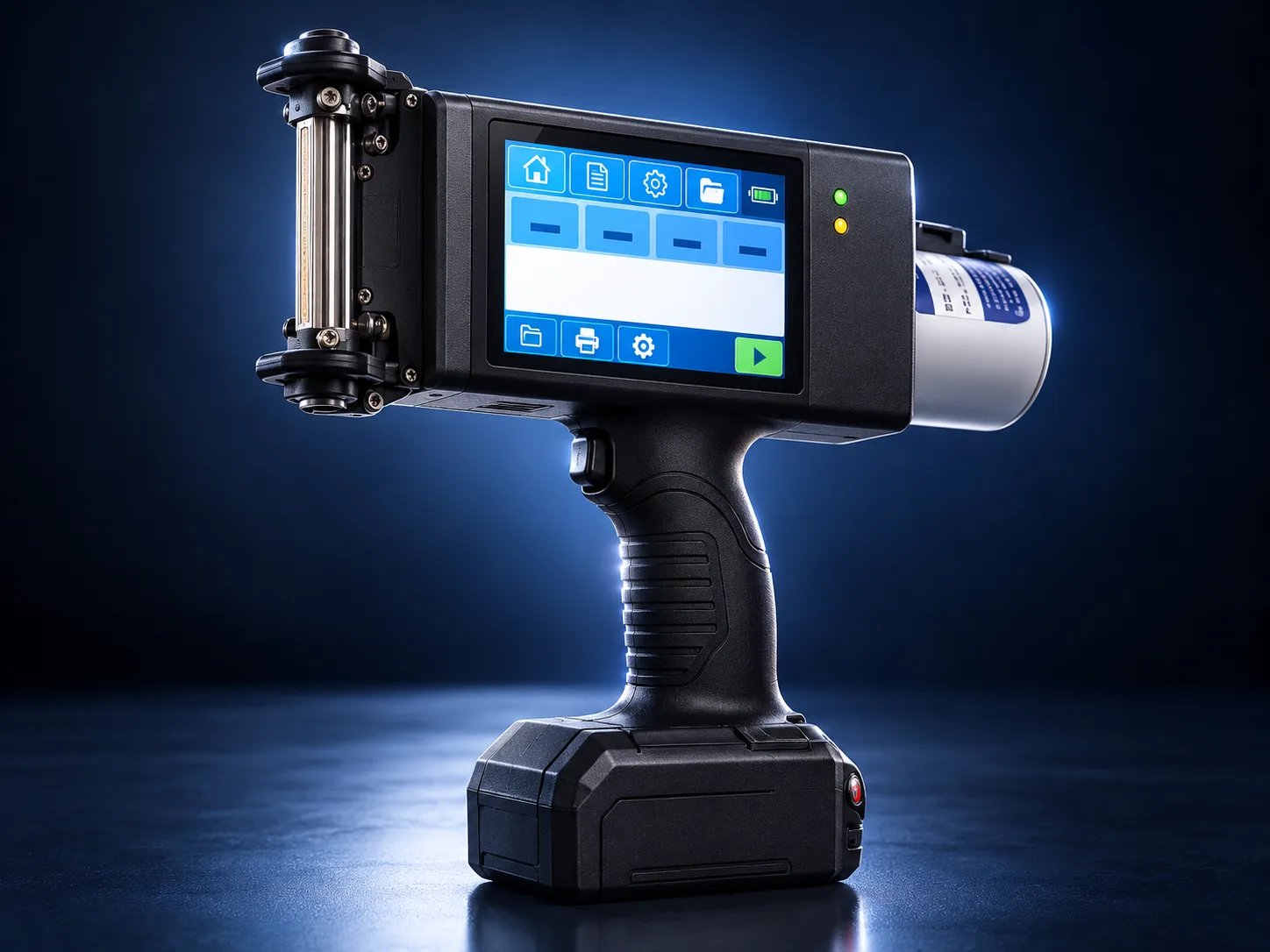
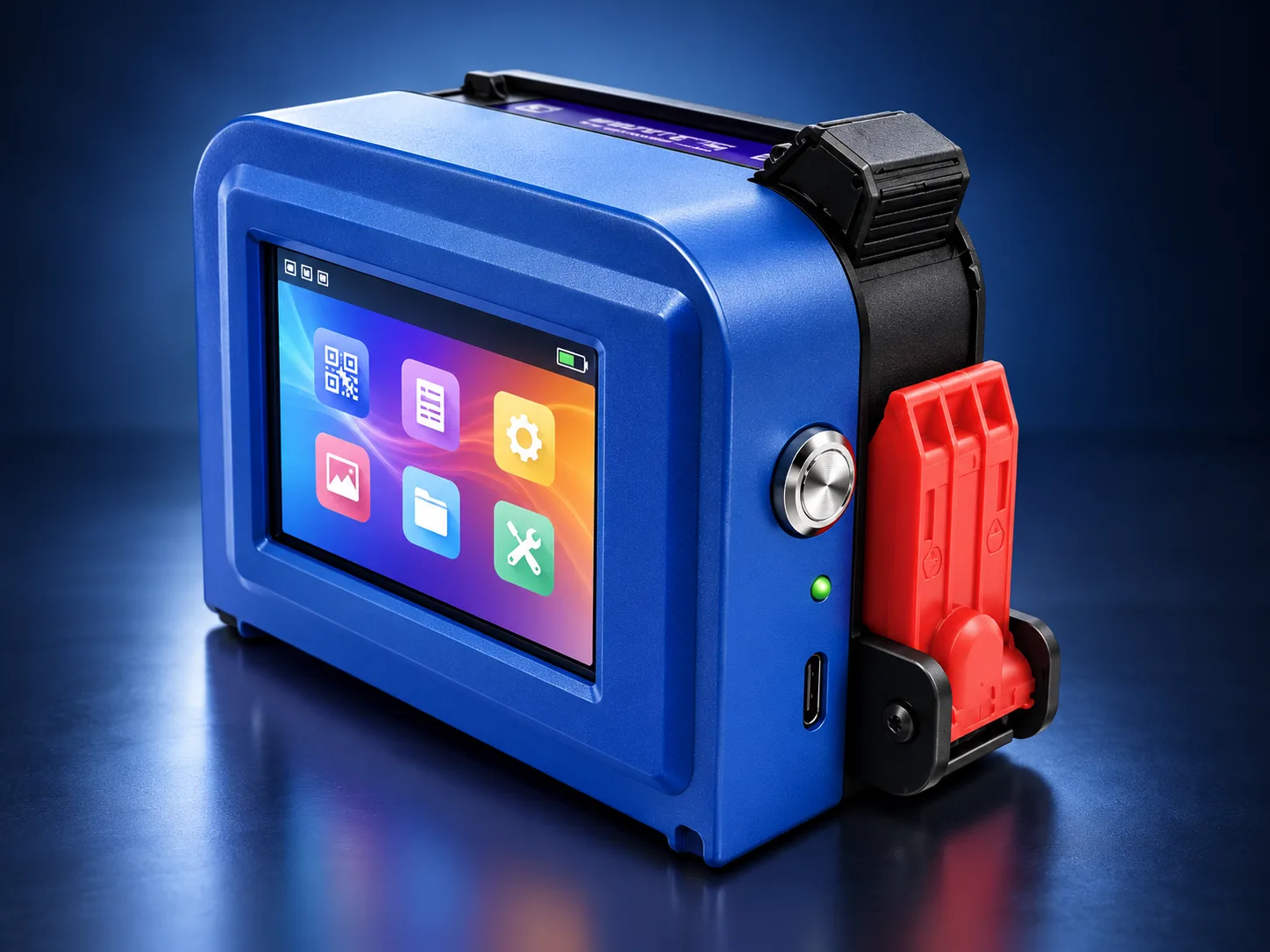
Folding cartons and gift boxes are usually porous, printed board. Thermal inkjet (TIJ) prints sharp text and barcodes on board with clean, cartridge-based ink. An inline TIJ printer codes boxes automatically on a conveyor. For gift boxes packed by hand at tables, a handheld TIJ printer lets operators code each box without a line.
Flexible pouches and flow-wrapped bars
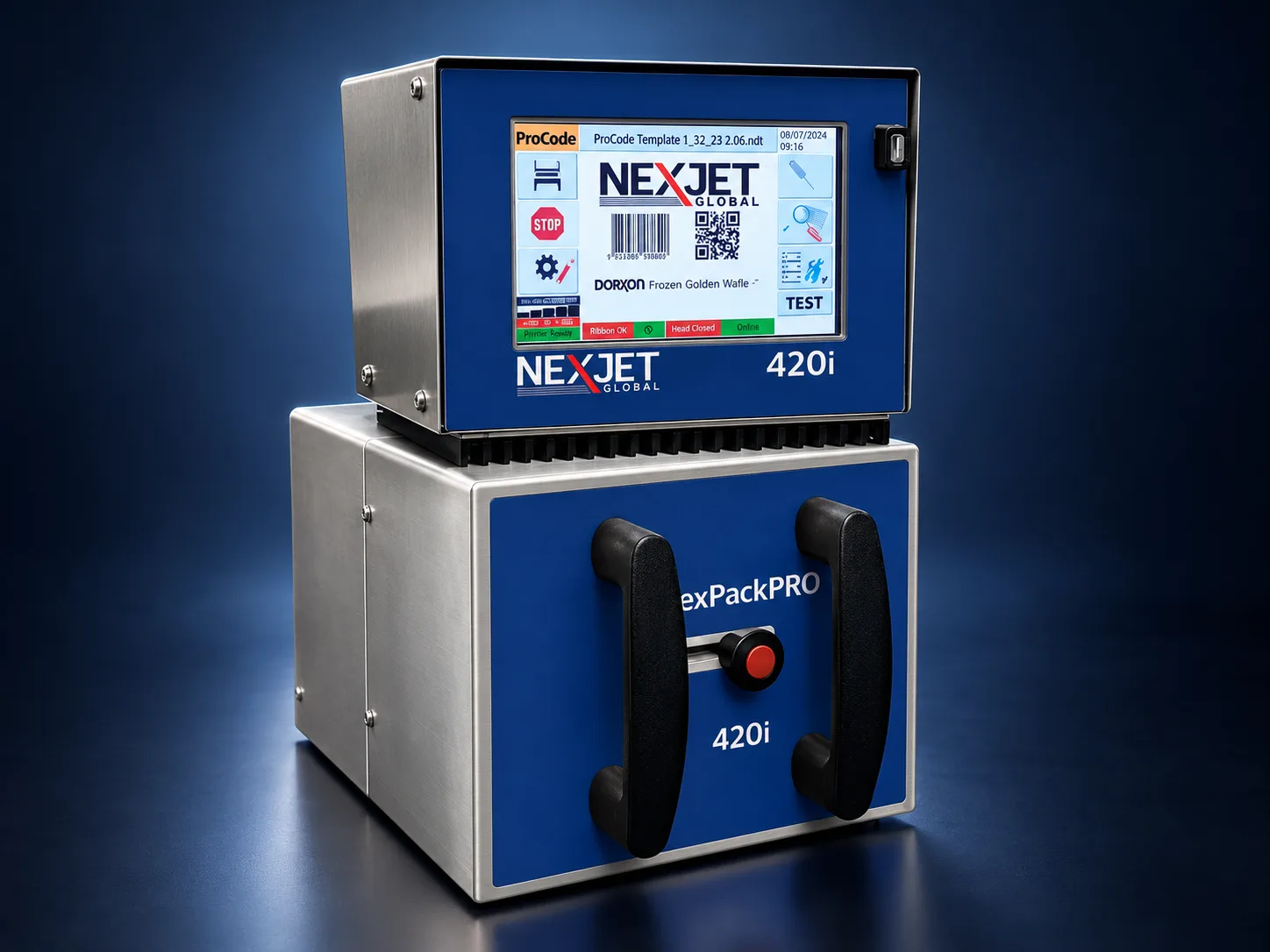
Pouches, sachets and flow-wrapped confectionery are coded on the packaging film before the pack is formed. A thermal transfer overprinter (TTO) is built into the packaging machine and prints dates, batch codes and barcodes onto the film with a ribbon. Our guide to thermal transfer overprinting explains how it works.
Plastic trays and clamshells
Trays and clamshells are non-porous and often curved or ridged. Inkjet on plastic needs the right ink: solvent-based TIJ cartridges on smooth surfaces, or continuous inkjet (CIJ) where the surface is uneven or the line is fast. A label with a pre-printed code area is another option when the tray surface is difficult.
Outer cases and shipper cartons
Shipper cases need larger characters for warehouse and export handling. A wide-format handheld printer prints tall text and barcodes on outer cases without a separate labelling line.
Sticky products, dust and cold stores
Dates are sticky and sugar dust builds up quickly. A few practical points help coding equipment cope:
- Keep printheads clean. Sugar residue on a printhead or on the pack surface reduces print quality. Add printhead wiping to every shift change during the peak.
- Code before the product touches the surface where possible. Coding cartons and film before filling keeps residue off the print area.
- Watch for condensation. Packs moved from cold storage into a warm hall can sweat. Ink on a wet surface smudges, so code before chilling or allow packs to reach room temperature.
- Store consumables correctly. Ink cartridges and ribbons should be kept away from direct heat, which matters in warehouses that get hot in summer.
Preparing coding equipment before the peak
Most coding stoppages during a peak come from avoidable causes: an empty cartridge, a worn ribbon, a blocked filter or a message typed incorrectly. A short preparation plan in November or December prevents them.
- Confirm the code content. Agree the date format, shelf life and batch-code structure with your quality team, and save them as messages on each printer so operators select rather than type.
- Order consumables early. Calculate cartridges, ribbon or ink for the whole season with a buffer. Supply lead times often grow when every packer orders at the same time.
- Service equipment before the rush. Replace filters, clean printheads and check mounting brackets and sensors while the line still has spare time.
- Run a test on every pack format. Gift boxes and seasonal packs may use different board or film from your everyday range. Test print each new material before the season.
- Train a back-up operator. Make sure more than one person per shift can change consumables and select messages.
- Keep a spare plan. For a critical line, a handheld printer can keep packs moving while a fixed coder is serviced.
Choosing equipment for a new or growing line
If you are adding capacity for the season, start with the pack and the line speed, not the printer. Our article on choosing a coding technology explains the method. As a short guide:
- Boxes on a conveyor: inline TIJ.
- Boxes and gift packs coded by hand: handheld TIJ.
- Pouches and flow-wrapped bars: TTO on the packaging machine.
- Fast lines with curved or uneven plastic: CIJ.
When you ask for a quotation, include the pack materials, code content, packs per minute and the start date of your season. Our guide to what to include in a coding enquiry lists the details that speed up a recommendation.
الأسئلة الشائعة
Which printer is best for coding date boxes?
For cardboard date boxes on a conveyor, an inline thermal inkjet printer gives sharp dates and batch codes with little maintenance. For boxes packed by hand, a handheld thermal inkjet printer is a practical choice.
Can I print expiry dates directly on plastic date trays?
Yes, with the right ink. Smooth plastic can be coded with solvent-based thermal inkjet cartridges, and continuous inkjet suits uneven surfaces and faster lines. Test print on your tray before the season.
How do I code dates packed in pouches?
Pouches are usually coded on the film inside the packaging machine with a thermal transfer overprinter, before the pouch is formed and sealed.
When should we prepare coding equipment for Ramadan production?
Ideally a month or more before your peak starts. That leaves time to service printers, test new seasonal packs and build a stock of consumables.
What information must be printed on date packaging in Saudi Arabia?
Prepackaged food sold in Saudi Arabia needs date marking under Gulf and SFDA labelling rules, usually a production and expiry date with a batch code. Your quality or regulatory team should confirm the exact requirements for your products.
إرشادات تحريرية مستندة إلى كتالوج شركة NEXJET. وهي ليست نشرة بيانات لطراز محدد.