
Continuous inkjet (CIJ) and thermal inkjet (TIJ) both print variable information such as dates, batch numbers and barcodes onto products without touching them. They are often shortlisted for the same line, but they work in very different ways, and the better choice depends mostly on your surface and your line.
How each technology works
Continuous inkjet (CIJ)
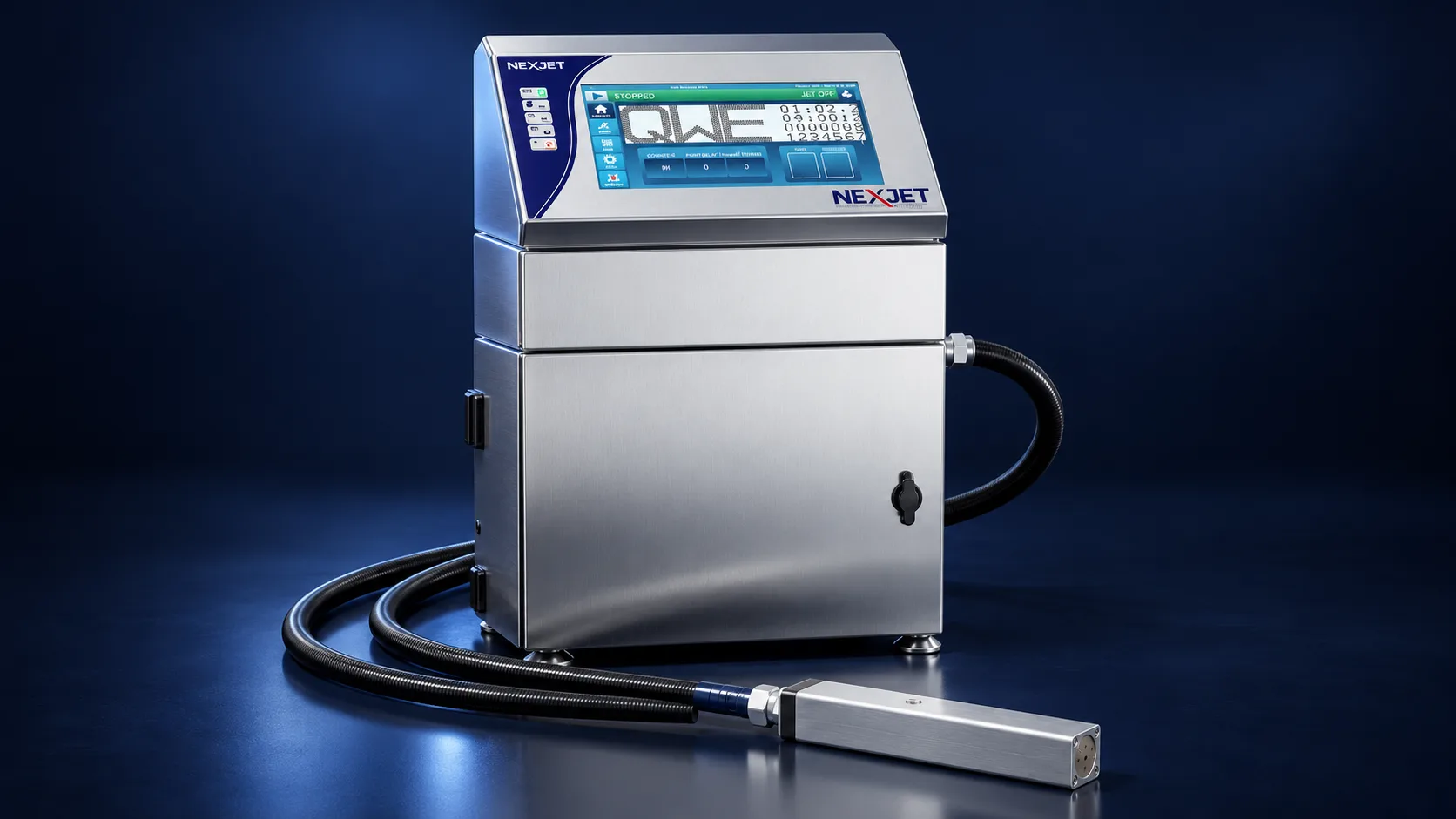
A CIJ printer pumps ink continuously through a nozzle and breaks the stream into tiny drops. Drops that are needed are charged and deflected onto the product; the rest return to the ink system and are reused. Because ink circulates and solvent evaporates, the printer adds make-up fluid to keep the ink at the right viscosity. Our CIJ guide explains the process in detail.
Thermal inkjet (TIJ)
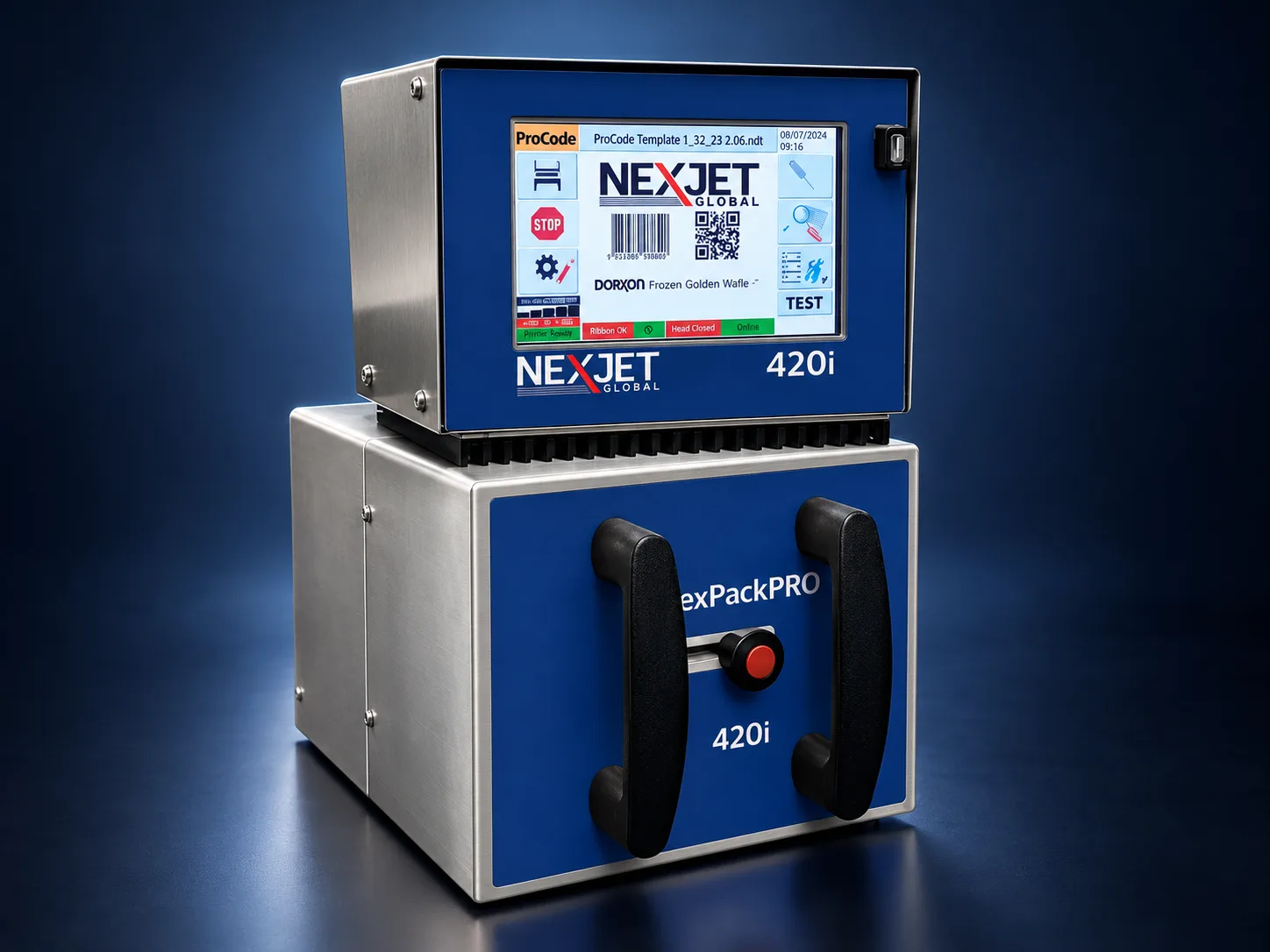
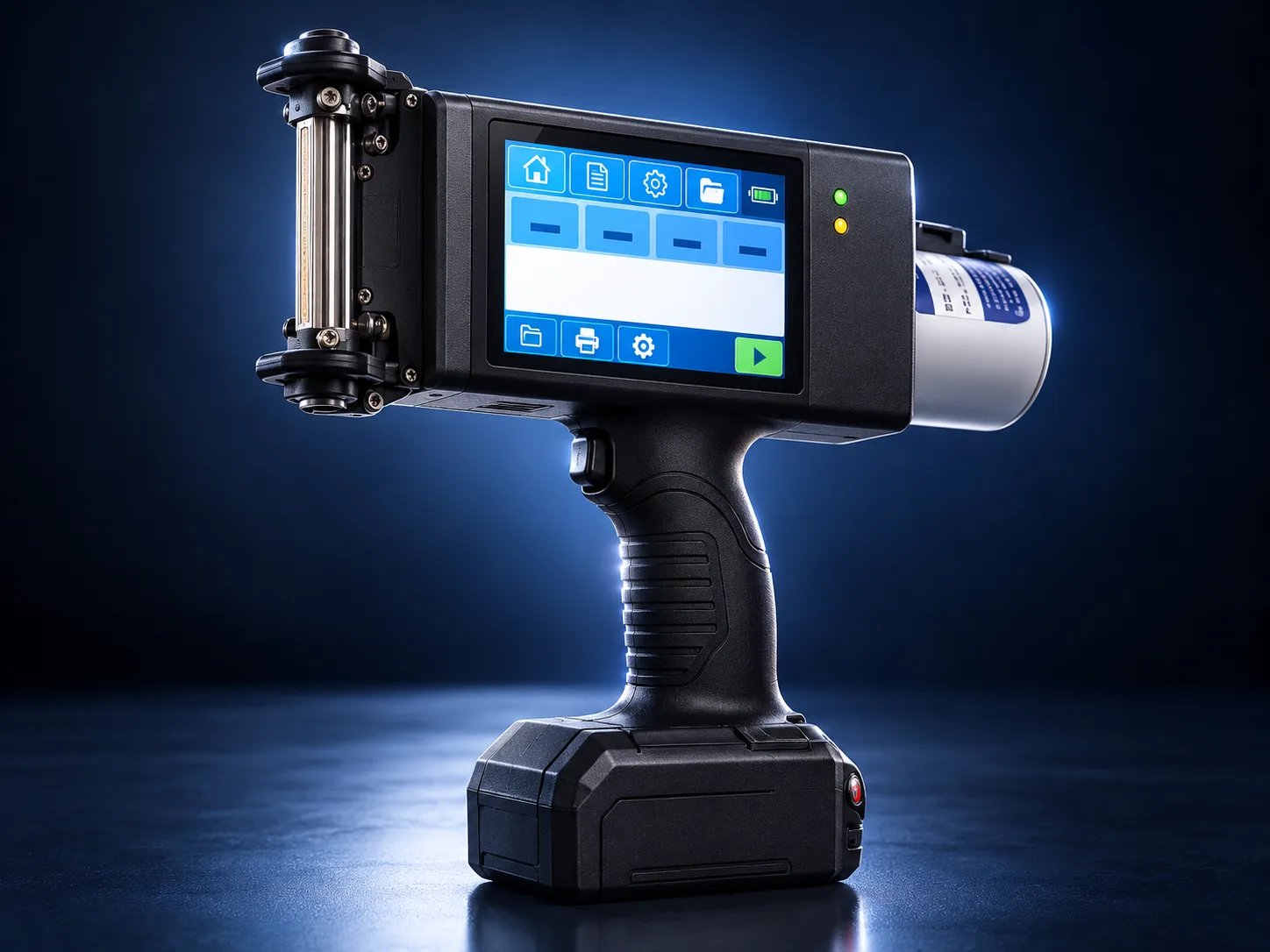
A TIJ printer uses a cartridge with a built-in printhead. Tiny resistors heat the ink and push drops out of many nozzles at once. When the cartridge is empty, the printhead is replaced with it, so there is no ink system to maintain. Our article on handheld and inline TIJ covers both formats.
Side-by-side comparison
Surfaces
- CIJ prints on almost any surface, including curved, recessed, uneven, wet or cold products such as bottles, cans, cable and pipes. Fast-drying solvent inks adhere to glass, metal and most plastics.
- TIJ prints best on flat, smooth or porous surfaces such as cartons, labels, paper and some films. Solvent-based cartridges extend TIJ to some non-porous surfaces, but it needs a short, consistent distance between printhead and product.
Print quality
- TIJ gives high-resolution, sharp text, logos and barcodes, including 2D codes such as DataMatrix on suitable surfaces.
- CIJ prints dot-matrix characters that are clear and readable but less sharp. It is ideal for dates and batch codes, and less suited to small, high-density barcodes.
Speed and print distance
- CIJ handles fast lines and can print from a greater distance, which helps when products vary in position.
- TIJ also codes moving products at production speeds, but resolution and code size affect the maximum speed, and the product must pass close to the printhead.
Maintenance
- TIJ is close to maintenance-free: change the cartridge, wipe the printhead. A fresh printhead with every cartridge keeps print quality consistent.
- CIJ has an ink system with pumps, filters and a printhead that need routine cleaning and scheduled service. Modern CIJ printers automate much of this, but they still need a trained operator.
Running cost
Running cost depends on how much you print. CIJ uses ink and make-up fluid continuously while running, plus service parts. TIJ uses cartridges, which cost more per millilitre of ink but waste little and need no service kits. For small codes on moderate volumes TIJ is often economical; for high-volume lines running several shifts, CIJ can be lower per code. Ask for a cost estimate based on your own code size and volume.
Environment
CIJ inks contain solvents, so ventilation and correct storage matter, particularly in hot production halls. TIJ water-based cartridges suit cleaner environments, while solvent-based cartridges need similar care.
When to choose CIJ
- Curved, cylindrical or uneven products such as bottles, cans, caps, cable and pipes.
- Glass, metal and plastic surfaces that need fast-drying, durable ink.
- Wet or cold products, such as chilled drinks or dairy packs.
- Fast lines where products vary in distance from the printhead.
See the continuous inkjet printer.
When to choose TIJ
- Cartons, shipper cases, labels and paper-based packaging.
- Sharp text, logos and barcodes, including 2D codes.
- Lines where low maintenance and a clean process matter.
- Lower volumes, or products coded by hand.
See the inline TIJ printer and the handheld TIJ printer.
Still unsure?
If your surface is flexible film rather than a rigid product, look at thermal transfer overprinting as well; our TTO guide explains it. If you need a permanent, ink-free code, read our laser marking guide. For a general method, start with choosing a coding technology.
The most reliable way to decide is a sample print on your actual product. Send your material, code content and line speed, and the team can recommend and test the right technology.
الأسئلة الشائعة
What is the main difference between CIJ and TIJ?
CIJ circulates ink continuously and deflects drops onto the product, so it prints on almost any surface at high speed. TIJ fires ink from a disposable cartridge printhead, giving sharper print with very little maintenance, mainly on flat and porous surfaces.
Which is cheaper to run, CIJ or TIJ?
It depends on your volume and code size. TIJ is often economical for small codes and moderate volumes, while CIJ can cost less per code on high-volume, multi-shift lines. Compare using your own production figures.
Can TIJ print on plastic bottles?
TIJ needs a smooth surface close to the printhead, so it is not usually the first choice for curved bottles. CIJ or laser is more common for bottles.
Which prints better barcodes?
TIJ prints higher-resolution barcodes and 2D codes such as DataMatrix. CIJ is better suited to text such as dates and batch numbers.
Does CIJ need more maintenance than TIJ?
Yes. CIJ has an ink system that needs routine cleaning and scheduled service, while TIJ maintenance is mostly changing cartridges and wiping the printhead.
إرشادات تحريرية مستندة إلى كتالوج شركة NEXJET. وهي ليست نشرة بيانات لطراز محدد.